EN
EN  AR
AR  ES
ES  RU
RU 
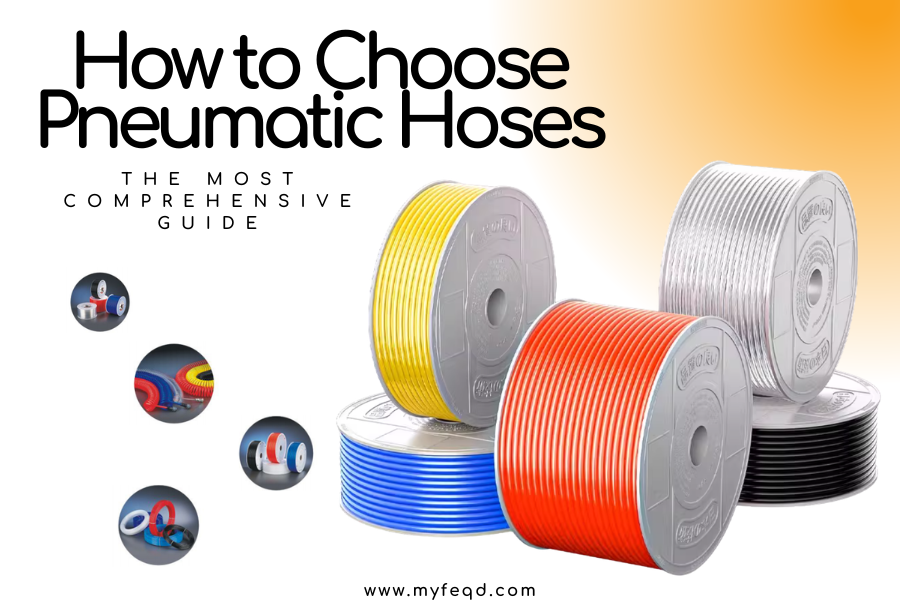
How to Choose Pneumatic Hoses :The Most Comprehensive Guide
Pneumatic hoses acts much like the blood vessels within the human body; working in conjunction with pneumatic fittings, it serves primarily to convey compressed air throughout a pneumatic system, connecting key components such as pneumatic cylinders, solenoid valves, and air preparation units.
The quality of this tubing—and the appropriateness of its selection—directly determines the smoothness of airflow and the integrity of the system’s seals. Furthermore, it critically impacts the equipment’s ability to operate safely, stably, and with long-term durability.
An improper choice can easily lead to issues such as air leaks, burst tubing, or material degradation and cracking—problems that not only disrupt production but also pose significant safety risks.
Today, with your practical needs in mind, we will clearly outline the core considerations for purchasing pneumatic tubing, including material distinctions, common misconceptions regarding sizing, and effective compatibility strategies. Whether you are a corporate purchasing agent, a technical engineer selecting components, or a newcomer to the field, you will find this guide easy to understand—ensuring you make the right choice with confidence.
Core Principles for Selection and Purchase
Selecting pneumatic tubing doesn’t need to be overly complicated; simply keeping three core principles in mind—suitability for the environment, sealing performance, and service life—is sufficient. If you base all subsequent selection decisions around these key points, you can hardly go wrong.
- The material, dimensions, and pressure rating of the hose must be properly matched with the working pressure, conveyed medium, connector type, and installation environment specified in the original design drawings. Do not attempt to make do with unsuitable components, as this significantly increases the risk of failure.
- The hose must feature uniform wall thickness, a smooth inner surface, and compatible connections; this ensures that compressed air does not leak, minimizes pressure loss, and enables the system to operate stably.
- Selection should be based on the specific operating environment—for instance, whether corrosive substances are present, if temperatures are high, or if frequent bending is required. Choosing the appropriate material and wall thickness can extend the hose’s service life; by reducing the frequency of replacements, you save both time and money.
Pneumatic hoses are selected based on their material.
The material of a pneumatic hose directly determines its resistance to high temperatures, corrosion, and pressure, as well as the specific environments in which it is suitable for use. Hoses made from different materials vary significantly; therefore, users should make their selection based on their specific operating conditions.
The five types outlined below are the most commonly used in industrial settings; we will explain each one in detail to ensure they are easy to understand and select.
Hose Material | Core Features | Applicable Scenarios | Shopping Tips |
PU Hose (Polyurethane) | This is one of the most commonly used types; it offers exceptional flexibility—being lightweight and easy to bend—while also featuring excellent abrasion resistance and anti-aging properties. Its smooth inner wall ensures unimpeded airflow, and it provides reliable sealing at a relatively affordable price point. | It is suitable for most standard industrial pneumatic systems—such as machine tools, assembly lines, pneumatic manipulators, and small cylinders—and is an excellent choice, particularly for applications involving frequent bending or movement. | ① Do not use in high-temperature environments exceeding 60°C or in highly corrosive environments; ② Keep away from sharp objects to avoid scratching the tube walls; ③ For standard pressure applications (0.1–1.0 MPa), use the regular model; for high-pressure scenarios, be sure to select the thickened version. |
Nylon Hose (PA Tube) | It possesses sufficient hardness, is resistant to both abrasion and oil, and offers good toughness—making it resistant to breakage. Its high-temperature resistance is slightly superior to that of PU tubing (capable of withstanding temperatures up to approximately 120°C), and it also exhibits strong compressive strength; however, its price is slightly higher than that of PU tubing. | Suitable for lubricated compressed air systems and medium-to-high pressure (1.0–1.6 MPa) pneumatic equipment—such as the pneumatic circuits of heavy machinery or equipment connections in high-temperature environments—it is particularly well-suited for fixed piping or applications where minimal bending is required. | ① Its flexibility is slightly inferior to that of PU tubing; avoid frequent, forceful bending, as this can lead to premature aging and cracking. ② When pairing it with compression fittings or quick-connect fittings, ensure that the dimensions are precisely matched. ③ Do not expose it to direct sunlight for prolonged periods, as this will accelerate the aging process. |
PU Braided Hose | It possesses excellent flexibility and chemical properties, as well as good shock resistance; it is lightweight, exhibits minimal pressure loss, and maintains consistent hardness. Its working pressure is 1.8 times that of single-layer PU tubing, and its service life exceeds that of single-layer PU tubing by more than two times. It is non-toxic and odorless. | Industrial robots, pneumatic tools, pneumatic equipment for assembly plants, and pressurized transport pipelines. Conveyance of water and other fluids. Vehicle maintenance and residential painting. | ① It is somewhat heavy, making installation less convenient; furthermore, with prolonged use, it is prone to aging and delamination. ② When pairing it with clamp-style pipe fittings, pay particular attention to verifying the inner diameter of the hose. ③ Avoid contact with highly corrosive substances, as they will corrode and damage the hose walls. 4. Do not use in environments exceeding 80°C. |
| PTFE Tube (Polytetrafluoroethylene Tube) | It boasts exceptional corrosion resistance—impervious to strong acids, strong bases, and organic solvents—and exhibits impressive high-temperature tolerance (withstanding temperatures exceeding 200°C). Its smooth inner walls ensure unimpeded airflow, and it offers excellent sealing performance; however, it lacks flexibility and comes at a relatively high price. | Suitable for specialized, harsh environments—such as the chemical, medical, and food industries—and for pneumatic systems involving corrosive media or high temperatures; intended exclusively for fixed piping installations and cannot be bent. | ① Poor flexibility: strictly avoid forceful bending, as it is prone to breakage; ② When paired with ferrule-type tube fittings, dimensional tolerances are quite strict; ③ High cost: do not select this option unless the application involves special circumstances. |
| PE Pneumatic Hose | Constructed from high-quality PE material, offering superior resistance to acids and alkalis compared to standard PE tubing. The inner and outer surfaces of the tube are smooth, facilitating a smoother flow of liquids. The tubing is semi-transparent, allowing the fluid flowing inside to be visible. Temperature Range: 0°C to +55°C. Suitable for conveying acidic and alkaline substances, including lacquer thinner, dilute acids, toluene, electroplating solutions, and other chemicals. | Suitable for most standard industrial pneumatic systems—such as machine tools, assembly lines, pneumatic manipulators, and small cylinders—particularly in applications requiring frequent bending. | Please exercise caution when using this product in applications involving media temperatures exceeding 60°C, or fluids containing corrosive components (such as strong acids, strong bases, highly polar solvents, etc.), as there is a risk of hose rupture. Similarly, exercise caution in operating environments where the ambient temperature exceeds 60°C, or where chemical gases are present; such conditions may cause the hose to soften—leading to a significant reduction in pressure resistance—or result in rapid aging and cracking due to chemical corrosion. Do not store the product in damp environments or for extended periods (exceeding 12 months), as moisture-induced hydrolysis may occur, potentially leading to hose failure. |
Addendum: For standard operating conditions, opt for PU or PE tubing—they are lightweight, flexible, and durable. For high-pressure applications involving oil, choose Nylon; it is robust and offers worry-free pressure resistance. For high-pressure, high-flow scenarios, select braided tubing—it is cost-effective, practical, and highly versatile. Finally, for corrosive or high-temperature environments, choose PTFE; it is the ideal solution for handling even the most demanding special conditions.
Shop by Size
Matching dimensions is the most common pitfall when selecting hoses; many people confuse “outer diameter,” “inner diameter,” and “nominal bore.” Consequently, the hose they purchase fails to fit the connectors—making assembly impossible and resulting in air leaks. In reality, it is quite simple; let’s walk through it step-by-step so you can easily avoid this common mistake.
1.Outer Diameter ≠ Nominal Diameter
When we purchase pneumatic tubing, the specifications φ6, φ8, and φ10 refer to the *outer diameter* of the hose (commonly known as the “nominal size”)—not the inner diameter, nor the “nominal bore” as defined in piping standards.
Let me give you an example to clarify: for an 8mm PU tube (designated as φ8), the outer diameter is 8mm, while the inner diameter is approximately 6mm; the corresponding nominal diameter is likely DN6. If you mistakenly treat the nominal diameter as the outer diameter when making a purchase, the hose certainly won’t match the fittings—meaning you won’t be able to install it, and you’ll end up wasting money.
2.Common Sizes and Suitable Applications
Common outer diameters for pneumatic tubing include φ4, φ6, φ8, φ10, φ12, φ16, and φ20. Among these, φ6, φ8, and φ10 are the most frequently used sizes, as they are compatible with the majority of small-scale pneumatic components. For specific guidance on how to make your selection, please refer to the information below:
- φ4, φ6: Suitable for small components such as miniature cylinders and small solenoid valves, and used in pneumatic circuits with low flow rates.
- φ8, φ10: The most commonly used sizes; suitable for standard cylinders and general-purpose solenoid valves. They strike a balance between flow rate and flexibility, making them applicable in most conventional scenarios.
- φ12, φ16, φ20: Suitable for high-flow applications—such as those involving large-bore cylinders or high-frequency solenoid valves—or for long-distance air transmission, helping to minimize pressure loss.
3.Tips for Sizing and Fitting Pipe Connectors
Different types of pipe fittings have varying requirements regarding the inner and outer diameters of the hose. Keep the following points in mind to ensure a precise match—guaranteeing there are no leaks of either water or air:
- When pairing with quick-twist or barbed hose fittings: pay close attention to the hose’s inner diameter. Ensure that the inner diameter of the hose fits snugly against the outer diameter of the fitting body, leaving no gaps; otherwise, air leakage may occur. Additionally, verify the hose’s outer diameter to select the appropriate clamp.
- When pairing with ferrule-type tube fittings: Pay close attention to the outer diameter of the hose. The size of the ferrule must match the inner diameter of the hose exactly—even a slight discrepancy is unacceptable—otherwise, it will not clamp securely, resulting in air leakage.
- When pairing with push-in fittings: Pay close attention to the hose’s outer diameter. The hose’s outer diameter must match the inner diameter of the fitting; if it is too large, it cannot be inserted, and if it is too small, it will leak air or detach.
Classified by Wall Thickness
The wall thickness of a hose directly determines its pressure resistance, sealing integrity, and overall durability. If the wall thickness is uneven or too thin, the hose becomes prone to air leaks or bursting during operation; therefore, simply paying close attention to these two factors when making your selection is sufficient.
1.Wall Thickness Uniformity: The Foundation for Sealing and Pressure Resistance
If the wall thickness of the hose is uneven, the thinner sections are prone to bulging, leaking, or even bursting when subjected to compressed air pressure—a risk that requires particular attention in high-pressure environments.
Simple Buying Tips:
- Visually inspect the hose: its surface should be smooth, free of unevenness or variations in thickness.
- Measure with a caliper; a wall thickness variation of 0.1–2 mm across different sections is acceptable.
- Whenever possible, opt for reputable brands; their manufacturing processes are more standardized, and their wall thickness is more uniform.
2.Wall Thickness: Thicker is not necessarily better; the key is proper compatibility.
Many people assume that the thicker a hose’s wall, the better; however, this is not actually the case. If the walls are too thick, the hose becomes rigid, difficult to bend, and troublesome to install; conversely, if they are too thin, the hose lacks pressure resistance and is prone to failure. It is best to simply select a hose based on your specific operating pressure requirements.
Simple Reference:
- Low-pressure scenarios (0.1–0.6 MPa): Opting for standard wall thicknesses is sufficient—for instance, a φ8 PU tube with a 1.5 mm wall thickness, which offers both flexibility and excellent sealing properties.
- Medium-to-High Pressure Applications (0.6–1.6 MPa): Select the thickened version—for instance, an 8 mm PU tube with a 2.0 mm wall thickness—to ensure more reliable pressure resistance and minimize the risk of tube rupture.
- Matching Pipe Fittings: Insert-type pipe fittings are not particularly demanding regarding wall thickness; as long as the outer diameter matches correctly, they suffice. However, for clamp-type and ferrule-type pipe fittings, it is essential to ensure uniform wall thickness; otherwise, the connection will not be securely fastened.
Additional Key Points: These 3 Factors Affect Hose Service Life
In addition to the key points mentioned above, there are three minor details that also influence a hose’s durability and usability; be sure not to overlook them when making your selection.
1 .Every type of hose has a specific rated pressure capacity. When making a selection, ensure that the hose’s rated pressure is no lower than the actual operating pressure of your pneumatic system. Ideally, you should allow for a safety margin of 10% to 20% to prevent pressure fluctuations from damaging the hose.
For example: if the actual operating pressure of your pneumatic system is 0.8 MPa, you should select a hose with a rated pressure of at least 1.0 MPa to ensure safer and more reliable operation.
2.Hoses made from different materials possess varying temperature resistance capabilities. Therefore, you should select a hose based on the specific temperature conditions of your working environment to prevent premature aging or brittle cracking caused by extreme heat or cold.
For quick and easy reference: PU tubing (-10°C to 60°C), Nylon tubing (-10°C to 100°C), Braided tubing (-20°C to 80°C), and PTFE tubing (-50°C to 200°C).
3.Flexibility and Abrasion Resistance: Adapted to Installation Scenarios:
- For areas subject to frequent bending or movement (e.g., pneumatic manipulators, mobile equipment): Select PU tubing with excellent flexibility, as it is less prone to aging and cracking.
- For areas near moving mechanical parts or prone to friction: select wear-resistant nylon tubing or thickened PU tubing; alternatively, add a protective sleeve to extend service life.
- For stationary pipelines: opt for high-hardness, sturdy nylon or rubber tubing, as this offers better value for money.
Buying Process: 4 Simple Steps—Even Beginners Can Make the Right Choice
Worried about keeping track of too many key points? We’ve distilled it down to a simple 4-step process. Just follow along—whether you’re a beginner or a seasoned pro—and you’ll be able to make the right choice quickly, avoiding pitfalls and saving money.
- Define your operating conditions: Determine the pressure and temperature of your pneumatic system, and ascertain whether the conveyed air contains oil or corrosive substances; then, select the appropriate hose material accordingly.
- Confirm the Pipe Fitting Type: Determine whether you are using a clamp-type, ferrule-type, or insert-type fitting, and identify whether the measurement required is the hose’s inner diameter or outer diameter.
- Select Size and Wall Thickness: Based on the interfaces of the pneumatic components and the required flow rate, select the appropriate hose outer diameter; based on the system pressure, select the corresponding wall thickness to ensure compatibility with the tube fittings.
- Quality Inspection: Check that the hose walls are of uniform thickness and the surface is smooth; verify the rated pressure and temperature resistance range. Prioritize reputable brands and avoid inferior products.
Common Misconceptions
Drawing upon common purchasing experiences, we have summarized the five most common pitfalls. By avoiding these, you can significantly improve the accuracy of your product selection—and save a considerable amount on maintenance costs.
- Confusing the outer diameter with the nominal bore size → The hose and fittings you purchased won’t match up; they cannot be installed and will leak air.
- Focusing solely on the outer diameter while ignoring the inner diameter—this is particularly critical for push-to-connect and compression-type tube fittings; if the inner diameter is incorrect, the connection will not be secure and will result in air leakage.
- Thinking that the thicker the wall, the better → Hoses with excessively thick walls are difficult to bend, making installation troublesome and resulting in wasted money; simply select the thickness appropriate for the required pressure rating.
- Neglecting heat and corrosion resistance → Using ordinary PU tubing in high-temperature or corrosive environments leads to premature aging and cracking within a short period.
- Prioritizing low cost over quality → Inferior hoses feature uneven wall thickness and poor-quality materials; they are prone to air leaks and bursting, which ultimately proves more expensive and poses a safety risk.
Shopping Tips: Practical Tricks to Save Money and Peace of Mind
- During installation, avoid bending the hose too sharply or pulling it too forcefully; keep it away from sharp objects and high-temperature components to extend its service life.
- Periodically inspect the hoses; if you discover that the walls are aged, cracked, or leaking, replace them immediately—do not wait until a major malfunction occurs to address the issue.
To summarize: when selecting pneumatic tubing, the core principles are simple—ensure the material is compatible with the operating conditions, the dimensions match the fittings, and the wall thickness guarantees adequate pressure resistance. There is no need to overcomplicate the process. By following the key points and steps outlined in this article—and avoiding common pitfalls—both beginners and experienced users alike can easily make the right choice. This ensures the stable operation of your pneumatic system while saving you both money and unnecessary headaches.
To learn more, please contact us. Wenzhou Maifeng Pneumatic Co., Ltd. (MYFEQD)