EN
EN  AR
AR  ES
ES  RU
RU 
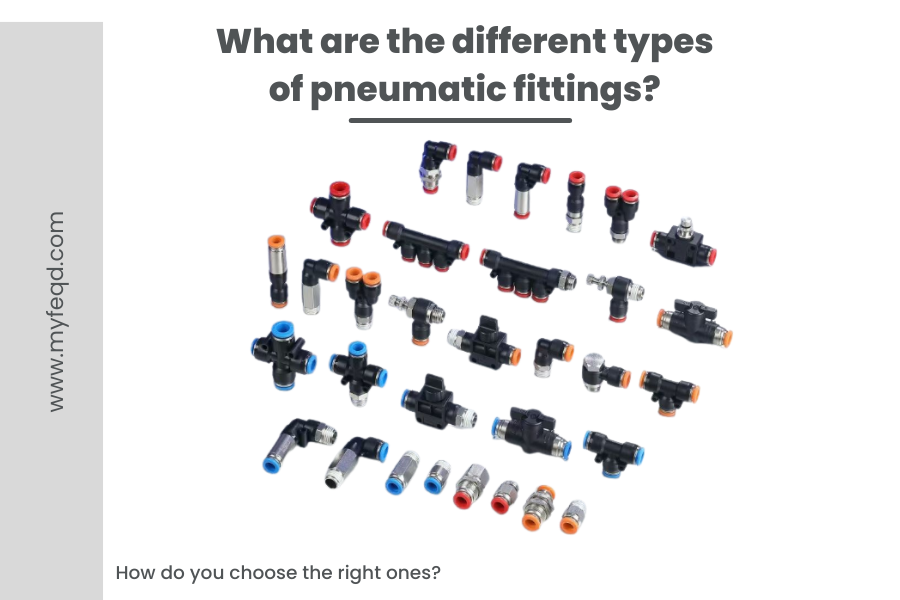
What are the different types of pneumatic fittings? How do you choose the right ones?
Pneumatic fittings serve as the “connecting hubs” of pneumatic systems, responsible for linking pneumatic components—such as cylinders, solenoid valves, and air preparation units—to the system’s tubing.
The appropriateness of the selected fittings directly impacts the system’s airtightness, airflow efficiency, and stability, and can even determine the operational safety and service life of the equipment. Selecting the wrong fittings can easily lead to issues such as air leaks, tubing detachment, or excessive pressure loss; this not only compromises production efficiency but may also result in increased maintenance costs.
Drawing upon real-world industrial application scenarios, this article refines and expands upon the key considerations for purchasing pneumatic fittings.
It breaks down the various fitting types, selection parameters, and common pitfalls to avoid, thereby empowering enterprises, technical professionals, and procurement personnel to quickly and accurately identify the pneumatic fittings best suited to their specific needs.
Pneumatic Fitting Buying Guide: Select with Precision to Avoid Pitfalls—Ensure Compatibility and Enhanced Durability for Your Pneumatic System.
3 Basic Principles for Selecting Pneumatic Fittings
When selecting pneumatic fittings, one must first adhere to three core principles: compatibility, sealing integrity, and durability.
This is the key to avoiding selection errors and serves as the foundation for all subsequent selection steps—a guideline that beginners can follow directly.
- Compatibility Priority: The form, dimensions, and material of the connector must be perfectly matched with the type of piping, the interfaces of pneumatic components, and the operating conditions, in order to avoid safety hazards resulting from “forced fits.”
- Compliant Sealing Performance: Pneumatic systems rely on compressed air for operation; consequently, the sealing performance of the connectors directly determines whether air leakage occurs. Priority should therefore be given to products featuring a sound sealing structure and high-quality sealing components.
- Durability Adaptation: Select connectors with appropriate materials and structures based on the operating environment (e.g., corrosive conditions, high temperatures, high-frequency mating) to extend service life and reduce replacement frequency and costs.
Key Selection Point 1: Select Based on Connector Type (Matching the Pipeline Type—The Most Critical Step)
Pneumatic tube fittings come in a wide variety of forms; the primary distinctions lie in the specific tubing materials they accommodate and the intended installation environments.
Different types of fittings are not interchangeable; therefore, it is essential to make a precise selection based on the specific type of tubing being connected—a step that constitutes the most common source of error during the purchasing process.
Outlined below are the three most frequently utilized types of fittings in industrial settings, accompanied by a detailed breakdown of their compatibility specifications.
1.Clamp-type Pipe Joint (also known as Hoop-type Pipe Joint) (also known as Ferrule Fitting)
Core Structure: Composed of a connector body, ferrule, sleeve, and nut. When the nut is tightened, the sleeve is compressed and deformed, tightly gripping the tubing while simultaneously forming a sealing surface against the connector body; this ensures excellent sealing performance without the need for additional sealing components.
Compatible Tubing: Primarily suitable for non-ferrous metal tubing, rigid nylon tubing, copper tubing, and stainless steel tubing. As these types of tubing are relatively hard and inelastic, the deformation and compressive grip of the ferrule ensure a secure fixation and effective seal, thereby preventing loosening.
Applicable Scenarios: Pneumatic systems requiring high precision, high pressure, and leak-free operation—such as pneumatic circuits in precision instruments, pneumatic systems in medical equipment, and connections for high-pressure pneumatic actuators. Suitable for fixed piping installations that do not require frequent disassembly.
Purchasing Considerations:
- Pay close attention to verifying the outer and inner diameters of the tubing; the ferrule dimensions must match the tubing dimensions precisely, as any dimensional deviation will result in seal failure.
- Prioritize copper or stainless steel for the ferrule material; these materials offer superior toughness—resisting fracture after deformation—and ensure a more stable sealing effect.
- During installation, ensure that the tubing is fully inserted to the bottom of the fitting body to prevent air leakage caused by improper seating.
2.Quick-Twist Fitting (also known as Quick-Grip Fitting)
Core Structure: Composed of a connector body and a nut, the assembly firmly secures the tubing to the connector body by tightening the nut to compress the tubing; it offers reliable sealing performance and convenient disassembly.
Compatible Tubing: Primarily suitable for cotton-braided rubber hoses and standard rubber tubing (such as high-pressure rubber hoses and general pneumatic hoses). These types of tubing are relatively soft and possess a certain degree of elasticity; the compressive force exerted by the clamp ensures a tight seal and prevents accidental detachment.
Applicable Scenarios: High-pressure, high-flow pipeline connections within industrial pneumatic systems—such as the intake and exhaust lines of large-scale cylinders, or the connections between air compressors and FRL units—and particularly well-suited for applications requiring frequent disassembly and maintenance.
Purchasing Considerations:
- Ensure the connector matches the inner diameter of the hose; the connector body must fit snugly against the hose’s inner wall to prevent excessive gaps that could lead to air leakage.
- For the clamp material, prioritize stainless steel or galvanized carbon steel, as these offer superior corrosion resistance and rust prevention, thereby enhancing fastening strength.
- For high-pressure applications, select a connector body with thickened walls to prevent rupture caused by excessive internal pressure.
3.Push-in Tube Fitting (also known as Quick-connect Tube Fitting)
Core Structure: Composed of a connector body, a stainless steel retaining ring locking sleeve, and a sealing element (O-ring). The tubing is inserted directly into the connector body and automatically secured by the locking sleeve; for disassembly, simply press the cap to withdraw the tubing. Installation and removal are extremely convenient, making this currently the most widely used type of pneumatic tube fitting in the industrial sector.
Compatible Tubing: Primarily suitable for nylon, plastic, and PU (polyurethane) tubing. These types of tubing are lightweight and highly resilient; their push-in connection mechanism requires no tools, ensuring high efficiency, while their sealing performance meets the requirements of standard pneumatic systems.
Applicable Scenarios: Pneumatic systems operating at standard pressures (0.1–1.0 MPa)—such as pneumatic circuits in machine tools, pneumatic components on assembly lines, and connections for small-bore cylinders. They are particularly well-suited for applications requiring frequent assembly and disassembly, or where flexible tubing layouts are essential (e.g., pneumatic manipulators and mobile pneumatic equipment).
Purchasing Considerations:
- Ensure compatibility with the tubing’s outer diameter; the inner diameter of the push-in fitting must match the outer diameter of the tubing. If the fitting is too large, air leakage may occur; if it is too small, the tubing cannot be inserted or may be damaged.
- For sealing components, prioritize Nitrile Rubber (NBR) or Fluororubber (FKM). NBR is suitable for standard compressed air, while FKM is recommended for applications involving oil-laden, high-temperature, or corrosive gases.
- Select fittings equipped with an anti-dislodgement clip to prevent the tubing from being accidentally pulled out.
Addendum: Other Common Connector Types (Adapted for Specific Scenarios)
- Welded Pipe Fittings: Secure pipelines via welding, offering exceptional sealing performance. They are suitable for environments involving high pressure, high temperature, and severe vibration (such as pneumatic systems in heavy machinery); however, they are difficult to disassemble and entail high maintenance costs.
- Threaded Tube Fittings: Secured via threaded connections, these are suitable for interfacing with pneumatic components (such as solenoid valves and cylinders) and are frequently used in combination with push-in or ferrule-type fittings.
- Miniature Connectors: Characterized by low air pressure and limited installation space, they are suitable for ultra-precision automation equipment.
Key Selection Point 2: Select Based on Connector Structure (to Suit Installation Layout)
The structural configuration of pneumatic tube fittings—such as elbows, straight connectors, and tees—is primarily selected based on the installation layout, routing, and branching requirements of the tubing system.
A judicious choice of structure optimizes the tubing layout, prevents bending and mechanical stress on the lines, and minimizes pressure loss.
Outlined below are the most commonly utilized structural types in industrial settings, along with their corresponding application scenarios.
- Straight Connector (Direct Connector) (Male Connector):The connector features a straight-line configuration with no bends, minimizing airflow resistance. Easy to install, it represents the most fundamental connector structure.
- Angle Connector (90° Elbow):The connector features a 90-degree bend, allowing for a change in tubing direction to prevent direct kinking and reduce airflow resistance.
- Panel Feed-through Connector (Bulkhead Connector):Equipped with a fixed flange, it can be mounted through an equipment panel; the two ends of the connector connect to tubing on the interior and exterior of the panel, ensuring a secure, neat, and aesthetically pleasing installation.
- Three-Way Connector (T-Type Connector) (Y-Type Connector):It features three ports, enabling pipeline branching to split a single airflow into two separate streams; its compact structure requires no additional accessories.
- PH External Hex Pneumatic Fitting,Right-angle two-way connector, right-angle three-way connector:Shaped at a right angle, the fitting features a 90° bend that allows for changes in pipeline routing; it is equipped with an external hex nut to facilitate easy installation and tightening.
- Pneumatic Fitting with Pressure Regulation (also known as a Pneumatic Flow Control Valve):Adjusts air pressure levels to control the operating speed of the cylinder and solenoid valve.
- Four-Way Connector (Y-Type, Cross-Type):It features four ports, enabling multi-branch piping configurations (splitting a single line into three), making it suitable for complex piping layouts.
- Five-way Fitting:It features five ports, enabling multi-branch piping configurations (splitting a single line into four), making it suitable for complex piping layouts.
- HVFF Pneumatic Fitting:It enables the switching on and off of the airflow interruption function.
Key Selection Point 3: Select Based on Interface Naming Conventions
There are three distinct methods for designating the interface specifications of pneumatic fittings.
Each designation method corresponds to a specific application scenario; therefore, when making a purchase, it is crucial to clearly identify the correct designation method to avoid installation issues caused by incompatible dimensions.
This is a detail that beginners most frequently overlook; a detailed breakdown of this topic is provided below.
1.Designated according to the nominal diameter of the connected piping (the most common method, commonly referred to as "nominal diameter")
Key Feature: Based on the nominal diameter of the tubing (e.g., φ3, φ4, φ5, φ6, φ8, φ10, φ12) as the standard reference, it corresponds directly to the actual tubing dimensions. This is the most widely adopted designation method in the industrial sector—intuitive, easy to understand, and less prone to error.
Applicable Scenarios: Primarily used for the selection of quick-twist fittings, ferrule fittings, push-in fittings, as well as branch fittings such as tees and crosses—covering the majority of standard pneumatic systems.
Key Selection Criteria:
- When selecting quick-screw pneumatic fittings, prioritize the *inner diameter* of the tubing; ensure that the fitting’s bore size matches the tubing’s inner diameter (e.g., for a hose with an inner diameter of φ8, select a quick-screw fitting with a bore size of φ8).
- When selecting push-in or ferrule-type tube fittings, prioritize the *outer diameter* of the tubing; the fitting’s bore size must correspond to the tubing’s outer diameter (e.g., for a PU tube with an outer diameter of φ6, select a push-in fitting with a bore size of φ6).
- Common bore size specifications include: φ4, φ6, φ8, φ10, φ12, and φ16; among these, φ6 and φ8 are standard industrial specifications compatible with most small-scale pneumatic components.
2.Based on the nominal thread size of the pipe fitting interface
Key Features: The nominal basis is defined by the thread size of the connector interface (e.g., M3, M4, M5, M6, G1/8, G1/4, NPT1/4, PT1/8, PT1/4, PT3/8, PT1/2). It does not correspond directly to the tubing size; therefore, conversion based on the specific tubing dimensions is required. Its application scenarios are typically specialized.
Key Selection Tip: It is essential to accurately measure the thread size and type of the connector interface (Metric, Imperial, NPT, or PT) to avoid installation issues caused by mismatched threads. If you are unsure, you may bring a sample of the connector or take precise measurements of the thread specifications.
3.Designated by Nominal Pipe Diameter and Joint Thread Combination (Commonly used for pneumatic component connections)
Key Feature: Simultaneously indicates both the nominal diameter of the tubing and the thread size of the connector interface. By addressing both tubing compatibility and the interface compatibility of pneumatic components, this serves as the standard nomenclature commonly used for the inlet and outlet connectors of pneumatic devices.
Applicable Scenarios: Primarily used to connect the inlet and outlet ports of pneumatic components (such as solenoid valves, cylinders, and pneumatic FRL units). For example, if a solenoid valve features a G1/4 port and is connected to a PU tube with an outer diameter of φ8, the corresponding fitting is designated as “φ8-PT1/4”.
Key Selection Criteria:
- First, verify the thread size of the pneumatic component interface (e.g., G1/4, M5);
- Next, verify the outer diameter of the connecting tubing (for push-in fittings) or the inner diameter (for compression or ferrule fittings);
- Select a fitting that matches both of these parameters—for instance, “φ6-M5” or “φ8-G1/4”.
Additional Selection Considerations: Material, Pressure, and Temperature (to suit operating conditions and extend service life).
In addition to the core points outlined above, the material, rated pressure, and operating temperature of the connectors must also be compatible with the operating conditions of the pneumatic system; failure to ensure such compatibility may lead to corrosion, aging, or rupture of the connectors, thereby compromising system stability. The following provides key supplementary details.
1.Material Selection (Environmental Suitability, Corrosion Resistance)
- Brass: The most widely used material, offering excellent cost-effectiveness. It exhibits resistance to mild corrosion, provides superior sealing performance, and is suitable for most standard industrial environments (free of corrosive gases) as well as general pneumatic systems.
- Stainless Steel (304/316L): Corrosion-resistant, high-temperature resistant, and high-strength; suitable for specialized environments—such as those found in the chemical, food, and outdoor sectors—that involve corrosive gases, high humidity, or elevated temperatures. It is particularly well-suited for the food and pharmaceutical industries, where it meets stringent hygiene standards.
- Plastic Materials (Nylon, POM): Lightweight, low-cost, and easy to install; suitable for low-pressure, ambient-temperature, and non-corrosive environments (such as small-scale pneumatic equipment). However, they possess lower mechanical strength and are not suitable for high-pressure or high-temperature applications.
- Material: Iron (Nickel-plated):Low-cost and easy to install, suitable for low-pressure, ambient-temperature, and non-corrosive environments.
2.Pressure and Temperature Selection (Matching Operating Conditions to Prevent Damage)
- Operating Pressure: For standard pneumatic systems, the operating pressure typically ranges from 0.1 to 1.2 MPa; standard push-in fittings with a rated pressure of ≥1.6 MPa are sufficient to meet these requirements. For high-pressure pneumatic systems (pressures ≥1.6 MPa), specialized high-pressure fittings must be selected to prevent fitting rupture caused by excessive pressure. (Examples include: quick-screw fittings, ferrule fittings, and custom-designed push-in fittings featuring claw-type retaining rings.)
- Operating Temperature: The standard operating temperature range for connectors is -10°C to 80°C, making them suitable for most indoor industrial environments. For high-temperature applications (≥80°C), stainless steel connectors (featuring built-in heat-resistant fluororubber seals) must be selected. For low-temperature applications (≤-10°C), materials resistant to low temperatures—such as stainless steel or specialized plastics (featuring built-in EPDM seals)—should be chosen to prevent material embrittlement and cracking.
Pneumatic Tube Fittings Buying Guide: Get It Right the First Time (Avoid Common Pitfalls)
Synthesizing all the selection criteria outlined above, we have developed a standardized, four-step purchasing process. Novices can follow this guide directly to quickly identify and select the appropriate pneumatic tube fittings while avoiding potential errors.
- Determine the Tubing Type: Identify the material of the tubing being connected (rubber hose, PU tubing, copper tubing, etc.), and select the corresponding connector type accordingly (quick-screw, ferrule, or push-in).
- Confirm Installation Layout: Based on the routing of the piping and branching requirements, select the appropriate connector structures (straight, elbow, tee, bulkhead, etc.).
- Verify Interface Parameters: Determine the dimensions of the tubing (inner/outer diameter) and the thread sizes of the pneumatic component ports; select the corresponding nominal interface specifications to ensure a perfect dimensional match.
- Matching Operating Parameters: Select the material based on the operating environment (e.g., corrosive conditions, high temperatures), and choose the corresponding rated parameters based on the system pressure and temperature, incorporating a safety margin of 10% to 20%.
Common Buying Pitfalls (A Guide to Avoiding Traps — A Must-Read for Beginners)
Drawing upon practical experience in industrial procurement, we have compiled a list of five common pitfalls in product selection to help you avoid traps, improve selection accuracy, and reduce maintenance costs.
- Focusing solely on dimensions while ignoring the connector type → If push-in fittings are used to connect rigid tubing, the tubing will fail to remain secured, leading to frequent air leaks.
- Approximate interface dimensions are sufficient. → Even a discrepancy of just 1 mm will result in seal failure or render installation impossible; the dimensions must match exactly.
- Using standard brass fittings in all scenarios → In corrosive environments—such as chemical plants or outdoor settings—the use of brass fittings will lead to corrosion-induced failure; therefore, stainless steel materials must be selected instead.
- Neglecting Seal Material → Using standard nitrile rubber seals in pneumatic systems involving oil or high temperatures leads to seal aging and air leakage; therefore, fluororubber seals must be selected instead.
- Prioritizing low prices while neglecting quality leads to inferior connectors characterized by poor materials and inadequate sealing performance. These defects make them prone to air leaks and breakage, ultimately resulting in increased maintenance costs. We recommend opting for products from reputable brands—specifically Wenzhou Maifeng Pneumatic (MYFEQD).
Shopping Tips
- When making bulk purchases, prioritize professional and experienced manufacturers to save time on communication and avoid purchasing errors, while also securing more favorable pricing.
- Keep a small stock of connectors in various specifications on hand to address unforeseen maintenance needs, thereby preventing production downtime caused by a lack of compatible connectors.
- During installation, ensure that the tubing is fully inserted and the fittings are securely tightened to prevent air leaks caused by improper insertion or loose connections. Avoid frequently inserting and removing push-in fittings to extend their service life.
Summary: The core principle when selecting pneumatic fittings is ensuring compatibility—specifically with the tubing, the system layout, and the operating conditions. By adhering to the selection criteria, procedures, and pitfalls-to-avoid guidelines outlined in this article, you can accurately identify the right products.
This ensures a leak-free and stable pneumatic system, while simultaneously extending the service life of the fittings and reducing both maintenance and procurement costs. Whether you are a novice or an experienced technician, this article serves as an invaluable purchasing reference, enabling you to quickly steer clear of common pitfalls and select the fittings best suited to your needs.
Contact us to learn more. Wenzhou Maifeng Pneumatic Co., Ltd. (MYFEQD) — Pneumatic Experts