AR
AR  EN
EN  ES
ES  RU
RU 
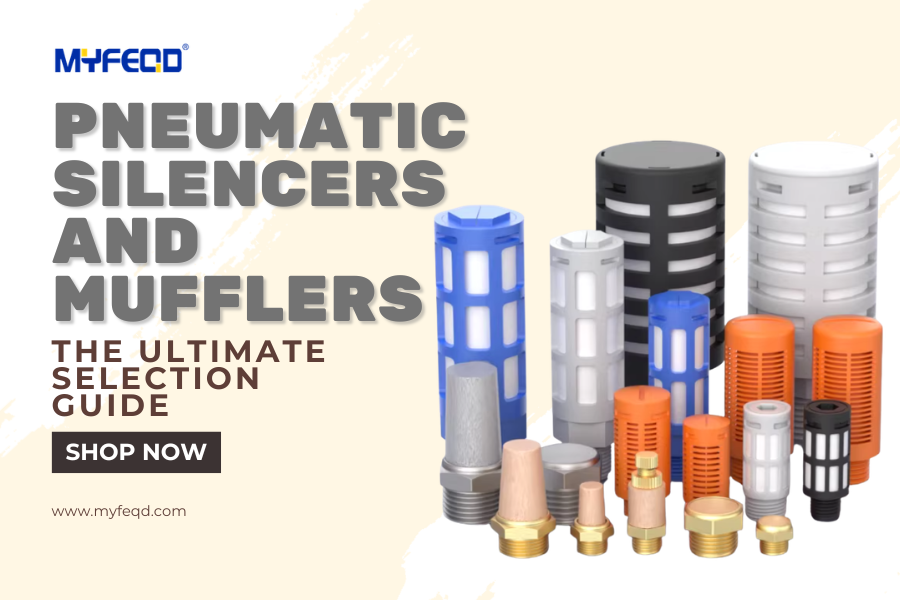
Pneumatic Silencers and Mufflers:The Ultimate Selection Guide
During the operation of pneumatic systems, exhaust noise constitutes a common form of industrial pollution. Not only does it adversely affect the working environment for operators, but prolonged exposure to high-decibel noise also poses a risk to human health.
Furthermore, the improper selection of silencers can lead to issues such as restricted exhaust flow, sluggish cylinder response, and increased energy consumption.
As a critical accessory within pneumatic systems—responsible for controlling exhaust noise and improving the working environment—the scientific validity of silencer selection directly impacts the system’s stability, noise reduction efficacy, and service life.
Drawing upon practical industrial application scenarios, this article provides a detailed breakdown of the core principles for silencer selection, supplemented by specific insights into high-frequency application details.
Its aim is to empower enterprises and technical personnel to quickly identify and select the appropriate silencers, thereby ensuring a dual guarantee of effective noise reduction and optimal system performance.
Key Selection Factors for Silencer Cores (Must-Read: Avoid Selection Errors)
The core principles of product selection are “matching system operating conditions,” “adapting to the operating environment,” and “satisfying functional requirements.” The following four factors constitute the foundation of the selection process—each is indispensable—and also represent frequent pain points where selection errors commonly occur in industrial settings; therefore, they warrant particular attention.
1.Interface Dimensions and Thread Type (A fundamental prerequisite; if they do not match, the product cannot be used.)
This constitutes the most fundamental and critical first step in selecting a silencer; it directly determines whether the device can be installed correctly, thereby preventing the issue of purchasing an incompatible unit that cannot be fitted. It is essential to strictly match the exhaust port dimensions and thread types of the solenoid valves, cylinders, or exhaust valves within the pneumatic system. These specifications must align perfectly; failure to do so will result in air leakage, an inability to secure the device, or even damage to the exhaust port threads.
Common port sizes include metric (M5, M10, M12) and imperial (G1/8, G1/4, G3/8, G1/2). Among these, G1/4 and G1/8 are the most frequently used sizes in industrial pneumatic systems, suitable for the majority of standard solenoid valves and cylinders; M5 is primarily utilized for small and miniature pneumatic components.
Common thread types include Metric threads, British Pipe threads (BSPP/BSPT), and American Pipe threads (NPT). Thread types for pneumatic components may vary slightly depending on the region and brand; therefore, when selecting components, it is essential to consult the product manual or physically measure the thread specifications to avoid confusion (for instance, British G-threads and American NPT threads are not interchangeable).
Additional Tip: Some silencers are equipped with adapter fittings that accommodate various thread sizes. These are ideal for pneumatic systems involving a mix of specifications; prioritizing such models during selection enhances overall versatility.
2.Material and Medium Compatibility (Adapts to the environment, extends service life)
The material of a silencer directly determines its corrosion resistance, hygienic rating, and suitability for specific media. Therefore, it is essential to select a highly compatible material based on the pneumatic system’s working medium (such as compressed air, dry air, or oil-laden air) and operating environment. This ensures that the material does not corrode or degrade, thereby preventing silencer failure or environmental contamination.
Detailed Guide to Common Materials and Their Suitable Applications:
- Brass: Features excellent thermal conductivity, strong sealing capabilities, and resistance to mild corrosion. It is suitable for high-temperature and high-pressure pneumatic systems—such as pneumatic circuits in heavy machinery or exhaust noise reduction in high-temperature environments—though it is slightly heavier and more expensive than PC or ferrous metals.
- PC (Polycarbonate): A versatile, mainstream material featuring a transparent appearance that allows for the visual inspection of internal blockages. It offers excellent impact resistance, is lightweight, and is cost-effective. It is suitable for most standard industrial environments (free from corrosive gases, high temperatures, or dust contamination) and is ideal for use in general compressed air systems—such as pneumatic circuits in machine tools—as well as for noise reduction in the exhaust ports of small-scale pneumatic equipment.
- Iron Material: Characterized by high mechanical strength, excellent wear resistance, and good toughness, it is highly resistant to breakage. Its scope of application is broader than that of PC, making it suitable for use in pneumatic systems containing trace amounts of oil—such as pneumatic manipulators and the exhaust ports of pneumatic actuators on assembly lines. It offers excellent cost-effectiveness.
- Stainless Steel (304/316L): Offers excellent corrosion resistance, high-temperature durability, and superior hygienic properties, with no risk of particulate shedding. It is ideally suited for demanding and harsh environments—particularly in the food, pharmaceutical, chemical, and medical sectors—where it can withstand corrosive gases and high-temperature steam. Furthermore, it is easy to clean and fully complies with hygiene standards. The 316L grade of stainless steel provides even greater corrosion resistance than 304, making it the preferred choice for highly corrosive chemical applications.
Additional Note: If the compressed air within the pneumatic system contains a significant amount of oil (e.g., if the oil-free air compressor fails to meet specifications), it is recommended to prioritize the use of stainless steel components to prevent corrosion and premature aging of PC and iron materials caused by oil contamination. Furthermore, if the medium contains corrosive gases (such as acidic or alkaline gases found in the chemical industry), the use of iron materials is strictly prohibited; in such cases, 316L stainless steel or specialized corrosion-resistant materials must be selected.
3.Pressure and Temperature Range (Match operating conditions to prevent damage)
The rated operating pressure and temperature of the silencer must encompass the actual operating conditions of the pneumatic system. Operation outside this range may result in deformation or rupture of the silencer, loss of noise-reduction effectiveness, and even compromise the operational safety of the entire pneumatic system.
Reference for Common Operating Parameters:
- Operating Pressure: The operating pressure of most industrial pneumatic systems ranges from 0.1 to 1.0 MPa. Standard silencers feature a rated pressure range capable of covering 0.1 to 1.6 MPa, which is sufficient to meet the requirements of typical applications. However, for high-pressure pneumatic systems (e.g., those with pressures ≥ 1.6 MPa), specialized high-pressure silencers must be selected to prevent the silencer from rupturing due to excessive pressure.
- Operating Temperature: The standard operating temperature range for conventional silencers is -10°C to 80°C, making them suitable for most indoor industrial environments. For high-temperature applications (such as pneumatic equipment situated near boilers or furnaces, where temperatures exceed 80°C), silencers constructed from heat-resistant materials (e.g., stainless steel or brass) must be selected, with a rated temperature capacity of at least 260°C. Conversely, for low-temperature environments (such as outdoor settings or refrigerated workshops where temperatures drop to -20°C or below), low-temperature-resistant stainless steel silencers should be utilized to prevent material embrittlement and cracking.
Additional Tip: When selecting a model, verify the pneumatic system’s peak pressure as well as its maximum and minimum operating temperatures. Ensure that the silencer’s rated parameters incorporate a safety margin of 10% to 20% to enhance operational safety and service life.
4.Noise Reduction Effectiveness and Flow Characteristics (Balancing Requirements, Ensuring System Performance)
The primary function of a silencer is noise reduction; however, a certain inherent conflict exists between noise reduction effectiveness and airflow resistance (flow characteristics). Generally, the more effective the noise reduction, the greater the potential airflow resistance, which can impede the system’s exhaust velocity—leading to slowed cylinder movement and sluggish solenoid valve response. Conversely, lower airflow resistance often results in diminished noise reduction performance. Therefore, when selecting a silencer, it is essential to identify the optimal balance between noise reduction effectiveness and flow characteristics based on the specific requirements of the system.
Interpretation of Key Parameters:
- Noise Reduction Level (dB): The core metric for evaluating a silencer’s noise-reduction effectiveness. Standard silencers typically offer a noise reduction of 20–35 dB, thereby meeting noise standards for industrial workshops (≤85 dB). For noise-sensitive environments—such as precision instrument workshops or pneumatic equipment situated near office areas—silencers with a noise reduction level of ≥30 dB should be selected. For general workshops, silencers offering 20–25 dB of noise reduction are suitable, striking a balance between noise attenuation and airflow capacity.
- Flow Capacity (Cv Value): An indicator measuring the flow-through capability of a muffler. The higher the Cv value, the lower the airflow resistance and the faster the exhaust velocity, making it suitable for high-flow exhaust applications. Conversely, the lower the Cv value, the greater the airflow resistance; while this generally results in more effective noise reduction, it also restricts the exhaust flow rate. When selecting a muffler, it is essential to match the Cv value to the specific exhaust flow rate of the pneumatic component to ensure smooth system exhaust and prevent flow restriction caused by an undersized Cv value.
Additional Tip: For high-flow exhaust scenarios (such as those involving large-bore cylinders or high-frequency solenoid valves), priority should be given to flow characteristics; select a silencer with a high Cv value and minimal pressure drop. In noise-sensitive environments, you may appropriately sacrifice some flow capacity to prioritize a silencer that offers a higher level of noise reduction.
Selection Based on Function and Structure (Precise Matching to Scenarios, Enhancing Practicality)
Mufflers of varying structures and functions are suited to widely different application scenarios. By making a selection based on the system’s specific functional requirements—such as the need solely for noise reduction, the necessity for speed control, or limited installation space—it is possible to achieve “multifunctional utility,” thereby saving both costs and installation space. Outlined below are the three most commonly used types in industrial settings, featuring a detailed breakdown of their characteristics, suitable applications, and key considerations.
1.Universal Muffler (Sintered Type):
- Features: The interior utilizes porous sintered materials (copper granules, plastic granules, or stainless steel mesh) to absorb sound wave energy through their pores; it features a simple structure, moderate dimensions, and an affordable price point.
- Key Advantages: Stable noise reduction performance (20–30 dB reduction), high versatility, easy installation, and excellent cost-effectiveness—suitable for most standard applications.
- Applicable Scenarios: The vast majority of general exhaust applications—such as noise reduction at the exhaust ports of standard cylinders, standard solenoid valves, and pneumatic FRL units—making it the most commonly used type of muffler in industrial production.
- Precautions:
After prolonged use, the pores may become clogged with oil sludge or dust, resulting in reduced noise reduction effectiveness and restricted exhaust flow; therefore, regular cleaning or replacement is required every 3 to 6 months.
Not suitable for use in harsh environments containing excessive oil contamination or dust.
2.Throttling Silencer (Silencing Throttling Valve)
- Features: Integrates the functions of both a throttle valve and a silencer; exhaust speed is controlled by adjusting the throttle knob, while porous materials are utilized to reduce noise. With its compact structure, it serves as a direct replacement for the traditional “throttle valve + silencer” combination.
- Core Advantages: Dual functionality—serving two purposes in one—saves both installation space and costs. It simultaneously reduces noise and precisely controls cylinder movement speed, effectively meeting speed regulation requirements.
- Applicable Scenarios: Situations requiring precise control over cylinder movement speed—such as pneumatic manipulators, assembly line conveying mechanisms, and cylinder extension/retraction speed control circuits—and particularly well-suited for equipment with limited installation space.
- Precautions:
. The throttling aperture is inversely correlated with noise reduction effectiveness: the smaller the aperture, the slower the exhaust speed and the better the noise reduction effect; conversely, the larger the aperture, the faster the exhaust speed and the weaker the noise reduction effect—therefore, careful adjustment is required to achieve a proper balance.
. Regularly clean the throttling orifice and the sintered layer to prevent clogging, which could lead to a failure in speed regulation.
3.Waterproof and Dustproof Silencer (Plastic and Carbon Fiber Filtration Materials)
- Features: Building upon the standard silencer design, a water- and dust-proof cover or sealed structure has been added to prevent water, dust, and oil contaminants from entering the interior of the silencer and the exhaust ports of pneumatic components.
- Core Advantages: Combining noise reduction, waterproofing, and dustproofing capabilities, it effectively protects pneumatic components and extends the service life of both the silencer and the pneumatic system,Superior Noise Suppression.
- Applicable Scenarios: Pneumatic systems for outdoor pneumatic equipment, workshops with high dust levels (e.g., mechanical processing, mining equipment), and humid environments (e.g., cleaning equipment, food processing wash-down stages).
- Precautions:
. The waterproof and dustproof structure will slightly increase airflow resistance; therefore, the selected model must be matched to the system’s airflow rate.
. Regularly clean dust and debris from the surface of the waterproof and dustproof cover to prevent blockage of the air intake and exhaust channels.
Selection Recommendations for Silencers in Special Environments (Tailored Selection to Prevent Failure)
In industrial settings, certain environments present unique operating conditions—such as corrosiveness, stringent hygiene requirements, or high flow rates—where conventional silencers prove inadequate. Consequently, a targeted selection approach is required. Outlined below are selection strategies for four frequently encountered specialized environments, covering major sectors such as food processing, chemical manufacturing, and outdoor applications.
1.Cleanrooms and the Food & Pharmaceutical Industries (Hygiene Priority)
Such environments impose extremely stringent requirements regarding sanitary standards; silencers must not generate dust or debris, and they must be resistant to cleaning agents and corrosion to prevent contamination of products or the production environment.
Selection Recommendation: Priority should be given to silencers constructed from 304 or 316L stainless steel. These materials feature smooth, easy-to-clean surfaces, do not shed plastic fragments, and offer excellent corrosion resistance, enabling them to withstand the rigorous cleaning and disinfection protocols typical of the food and pharmaceutical industries (e.g., high-temperature steam and chemical sanitizers). The use of silencers made from PC (polycarbonate), iron, or copper is strictly prohibited, as these materials are prone to aging and shedding, which would result in environmental contamination.
2.Chemically Corrosive Environments (Corrosion Resistance Prioritized)
In such scenarios, the exhaust medium of pneumatic systems may contain acidic or alkaline gases and corrosive solvents. Conventional materials are susceptible to corrosion, which can lead to the rupture or failure of the muffler.
Selection Recommendations: Select materials based on the severity of the corrosion. For mildly corrosive environments (e.g., those containing small amounts of acidic gases), corrosion-resistant PC plastic is a suitable choice. For severely corrosive environments (e.g., those involving strong acidic or alkaline gases), it is necessary to select mufflers made of 316L stainless steel or specialized corrosion-resistant alloys. Additionally, the sealing structure of the muffler must be verified to prevent corrosive gases from permeating into the interior of the pneumatic components.
3.High-Speed Exhaust / High-Flow Applications (Flow Priority)
In scenarios like rapid extension and retraction of large cylinders, continuous exhaust from high-frequency solenoid valves, and exhaust from high-pressure pneumatic systems, the exhaust flow rate is large and the exhaust speed is fast. If the muffler’s flow capacity is insufficient, it will lead to poor exhaust, slower cylinder speed, sluggish valve response, and even affect system pressure stability.
Selection Recommendations: Prioritize mufflers with high CV values and low pressure drop losses, such as large-diameter general-purpose mufflers and high-pressure, high-flow mufflers, ensuring that the muffler’s flow capacity matches the system’s exhaust flow rate. Avoid using miniature, small-diameter mufflers, or clogged mufflers. If necessary, use a multi-port muffler to distribute the exhaust pressure.
4.Outdoor / Humid / Dusty Environments (Protection Priority)
In such environments, silencers are prone to clogging or corrosion caused by rainwater, dust, and debris, thereby compromising their service life and noise-reduction effectiveness. Furthermore, this can allow water and dust to infiltrate pneumatic components, potentially damaging the equipment.
Selection Recommendations: Opt for waterproof and dustproof silencers equipped with sealing gaskets and dust covers to prevent the ingress of water and dust. In terms of materials, prioritize stainless steel or corrosion-resistant PA to guard against corrosion caused by outdoor rainwater. Additionally, regularly inspect the protective structures and clear away surface debris to ensure the continued effectiveness of the protective measures.
Summary of the Silencer Selection Process (Get It Right the First Time, Avoid Errors)
Based on the selection criteria outlined above, we have developed a standardized, four-step selection process applicable to all industrial pneumatic systems. Technicians can follow this procedure directly to quickly identify the correct silencer, thereby avoiding selection errors.
1.Confirm Interface Parameters (Basic)
Measure or consult the specifications of your pneumatic components (such as solenoid valves, cylinders, or exhaust valves) to determine the exhaust port thread size (e.g., M5, G1/4) and thread type (Metric, Imperial, or NPT). This ensures that the silencer’s interface is a perfect match for the exhaust port. If you are unsure of the specifications, consider bringing a sample of the pneumatic component with you or physically measuring the threads to avoid purchasing the wrong item.
2.Analyze Work Environment (Adaptation)
Assess whether the pneumatic system’s operating environment imposes any special requirements, with a particular focus on the presence of corrosive gases or media, the need for sanitary-grade standards, exposure to humid, dusty, high-temperature, or low-temperature conditions, and any limitations on installation space. Based on this assessment, determine the appropriate material and protection rating for the silencer.
3.Define Functional Requirements (Precise)
Based on the core requirements of the system, select the appropriate type of silencer to avoid functional redundancy or insufficiency.
- Requires only basic noise reduction, with no other requirements → General-purpose Sintered Silencer (offers the best value for money);
- Requires noise reduction + cylinder speed control → Throttling Silencer (Silencing Throttle Valve);
- Humid/Dusty Environments → Waterproof and Dustproof Mufflers;
- High-Flow / High-Speed Exhaust → Large-Bore, High-Cv Silencer.
4.Verify Operating Parameters (Assurance)
Finally, verify that the rated operating pressure and operating temperature range of the selected silencer cover the system’s actual operating conditions (peak pressure, maximum/minimum temperatures). Simultaneously, cross-check the noise reduction level and Cv value to ensure that both noise reduction and flow requirements are met, while maintaining a parameter margin of 10% to 20%.
Muffler Maintenance Tips (Extend Lifespan, Ensure Performance)
Silencers are consumable components within pneumatic systems; their service life is directly correlated with the frequency of maintenance. Proper maintenance can extend their lifespan and prevent system disruptions caused by silencer failure. The following are three key maintenance points:
Lorem ipsum dolor sit amet, consectetur adipiscing elit. Ut elit tellus, luctus nec ullamcorper mattis, pulvinar dapibus leo.
- Regular Inspection: Inspect the appearance and exhaust performance of the muffler every 1 to 3 months. If any surface damage or air leaks are detected—or if exhaust noise increases significantly, or the cylinder speed slows down abnormally—it is highly likely that the muffler is clogged and requires immediate attention.
- Cleaning and Replacement: Under normal operating conditions, the muffler should be cleaned once every 3 to 6 months (cleaning methods include reverse-blowing with compressed air or rinsing with clean water; for stainless steel models, a disinfectant may also be used). If the muffler becomes severely clogged and cannot be effectively cleaned, it must be replaced immediately to prevent any disruption to the system’s exhaust flow. In demanding environments (e.g., those with high levels of dust or oil contamination), the cleaning and replacement cycle should be shortened to every 1 to 2 months.
- Storage Precautions: Unused silencers must be stored in a dry, well-ventilated environment free of corrosive gases to prevent material aging and corrosion. During installation, ensure a tight seal to prevent air leakage, which could compromise noise reduction effectiveness and system pressure.
Common Selection Pitfalls (A Guide to Avoiding Traps)
Drawing upon practical experience in industrial applications, we have compiled four common pitfalls in product selection to help technical personnel avoid potential traps and improve selection accuracy:
- Misconception 1: Focusing solely on noise reduction performance while neglecting flow characteristics → This leads to excessive muffler resistance, resulting in slowed cylinder speeds, sluggish valve response, and even an adverse impact on system pressure.
- Misconception 2: Approximate interface dimensions are sufficient. → Even a minute discrepancy in interface dimensions can lead to air leaks, failure to secure properly, or even damage to the exhaust port threads; a perfect match is absolutely essential.
- Misconception 3: Using general-purpose silencers in all scenarios → In specialized environments (such as the chemical and food industries), the use of general-purpose silencers can lead to corrosion and contamination, thereby shortening their service life.
- Misconception 4: Neglecting maintenance, under the assumption that silencers do not require replacement → A clogged silencer impairs system performance, can even damage pneumatic components, and increases maintenance costs; therefore, regular maintenance and replacement are essential.
Summary: The core principle of selecting a pneumatic muffler is to “match the operating conditions, suit the environment, and satisfy specific requirements.” By adhering to the selection guidelines, procedures, and pitfalls-to-avoid checklist outlined above, you can identify the most suitable and efficient muffler solution for your pneumatic system. This ensures the stable and efficient operation of the system—while effectively controlling exhaust noise and improving the work environment—thereby reducing equipment maintenance costs and energy consumption.
For further information, please contact us. Wenzhou Maifeng Pneumatic Co., Ltd. (MYFEQD) boasts 15 years of experience in the pneumatic industry, encompassing both manufacturing and sales. With our extensive expertise in the field, we would be delighted to serve as your trusted pneumatic specialists in China.